
Introduction
Singapore is a regional data centre hub with total capacity exceeding 1.4 gigawatts, and data centres play a foundational role in supporting the country’s digital economy. Demand for compute resources is being driven by the growing use of AI workloads, autonomous and robotic systems, and immersive virtual interactions, making future-ready data centre infrastructure more important than ever.
However, data centres are also heavy users of power and water. As a compact city-state, Singapore is uniquely positioned to innovate and pioneer solutions that support more sustainable data centre growth. This is where data center liquid cooling is gaining importance, helping operators manage rising thermal loads more efficiently while supporting broader goals around resilience, efficiency, and greener digital infrastructure.
Key Takeaways:
- Singapore is a major regional data centre hub, making cooling efficiency an increasingly important infrastructure priority.
- Data center liquid cooling is becoming more relevant as AI, HPC, and other high-density workloads generate greater thermal loads.
- Common liquid cooling methods include direct-to-chip cooling, immersion cooling, and rear-door heat exchangers.
- Liquid cooling can help operators improve heat removal, support denser rack environments, and plan for more efficient long-term growth.
- Hybrid and retrofit approaches can allow existing data centres to adopt liquid cooling without a full facility rebuild.
What is Data Center Liquid Cooling?
Data center liquid cooling is a thermal management method that uses liquids such as water or dielectric coolants to remove heat from IT equipment more effectively than traditional air cooling. Instead of relying only on airflow to carry heat away after it has spread through the server or rack, liquid cooling captures heat closer to the source.
This makes liquid cooling especially useful in modern environments where CPUs, GPUs, and other high-power components generate concentrated thermal loads. As rack densities increase, traditional air cooling can become harder to scale efficiently. Liquid cooling offers a more direct and controlled way to manage heat, helping operators support higher-density deployments while maintaining performance stability.
In practical terms, data center liquid cooling is not just about replacing air cooling. It is about improving how heat is managed across the facility, especially where power density, equipment performance, and long-term infrastructure planning all matter.
Why Cooling Matters in Modern Data Centres
Cooling is one of the most important operational functions in any data centre. It affects uptime, hardware reliability, energy use, and the ability of systems to perform consistently under load. When cooling is inadequate, even high-quality IT infrastructure can face thermal stress that impacts performance and long-term durability.
As workloads intensify, cooling challenges become more visible. Localised hotspots can develop in dense racks. Equipment may throttle performance to protect itself from excessive heat. Cooling systems may consume more energy as they work harder to maintain stable temperatures. Over time, these issues can affect both operational efficiency and business continuity.
For this reason, the cooling strategy is no longer just a facility concern. It is a core part of data centre resilience and scalability. Operators increasingly need solutions that can support current workloads while also preparing the facility for future density and growth. That is one of the key reasons why data center liquid cooling is receiving more attention.
What Are the Limitations of Traditional Air Cooling?
Traditional air cooling remains widely used, and in many lower-density environments it still performs well. However, as thermal demands increase, its limitations become harder to ignore.
One major limitation is heat transfer efficiency. Air is less effective than liquid at removing concentrated heat from high-power components. To compensate, facilities often need to move larger volumes of air, which can increase fan power consumption and place more strain on supporting infrastructure.
Another limitation is hotspot management. Even when overall room temperatures appear acceptable, specific racks or components may still run hotter than others. This uneven cooling can create performance inconsistencies and make optimisation more difficult.
Air cooling can also become less practical as rack density rises. Simply pushing more cold air through denser environments does not always deliver proportional results. At a certain point, operators may need a more targeted method of heat removal. That is where data center liquid cooling becomes more attractive, especially as part of a high-density or future-ready strategy.
How Data Center Liquid Cooling Works
Data center liquid cooling works by absorbing heat into a liquid and carrying that heat away from IT equipment more efficiently than air. The exact design varies depending on the cooling method, but the basic principle remains the same: remove heat as close to the source as possible and transfer it out of the system in a controlled way.
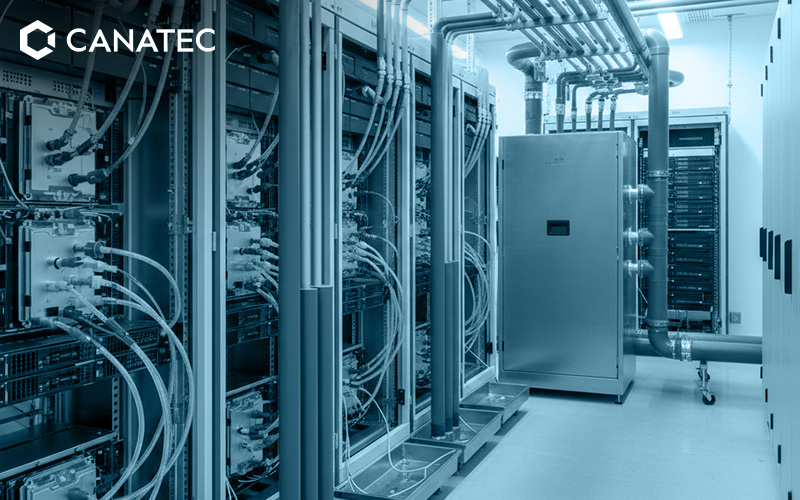
In direct-to-chip cooling, liquid flows through cold plates attached to high-power components such as CPUs and GPUs. These cold plates absorb heat directly from the chip, allowing it to be removed before it spreads through the rest of the system.
In immersion cooling, servers are placed in a non-conductive dielectric fluid that absorbs heat directly from the hardware. In rear-door heat exchanger systems, liquid helps remove heat from the air leaving the rack, improving cooling performance without requiring complete immersion or full chip-level integration.
Because liquid is far more effective than air at carrying away heat, these methods allow data centres to manage denser thermal loads with greater precision. This can reduce strain on room-level air systems and create a more scalable cooling architecture.

What are the Main Types of Liquid Cooling Systems?
As liquid cooling gains traction across modern data centres, several approaches have emerged to meet different operational, infrastructure, and performance needs. The right choice often depends on heat load, current cooling setup, and future scalability plans.
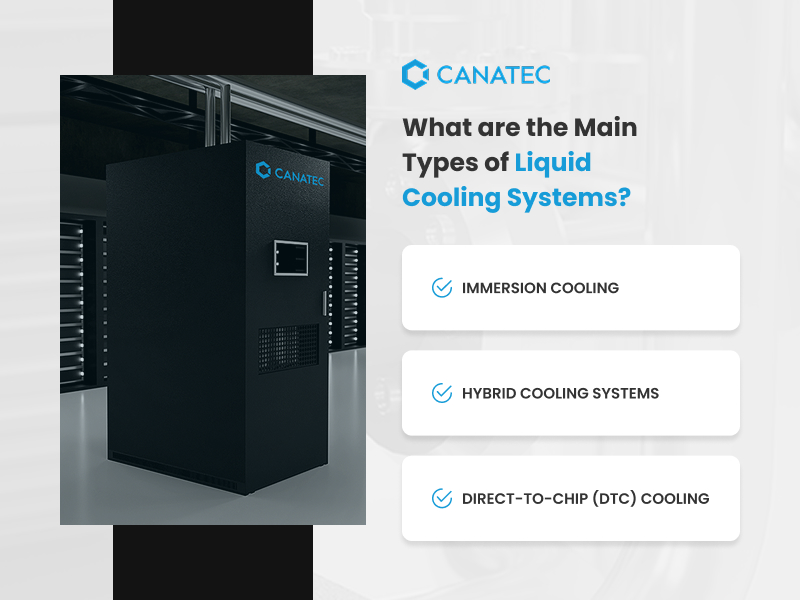
Here are the primary liquid cooling methods in use today:
1. Immersion Cooling
Immersion cooling solutions offer a highly effective and innovative approach to data centre thermal management. In this setup, servers are fully immersed in a heat-conductive, electrically safe dielectric fluid. As a result, heat can be absorbed directly at the source, bypassing the limitations of traditional airflow pathways.
This cooling method is effective for high-performance computing environments where servers generate extreme amounts of heat, such as hyperscale data centres and AI compute clusters. Its design reduces the need for traditional server fans, allowing the system to operate more quietly while trimming down the number of mechanical components required.
With fewer auxiliary systems required, immersion cooling lowers overall energy usage and contributes to ongoing cost efficiency. Its high heat-transfer effectiveness also enables consistent thermal stability, allowing mission-critical workloads to run reliably under extreme compute conditions.
2. Hybrid Cooling Systems
Hybrid cooling represents another advanced liquid cooling solution. Instead of replacing the entire cooling infrastructure at once, facilities can integrate liquid components gradually while continuing to use their existing air-based systems. This makes the transition more manageable, especially for operators with older equipment or limited space.
In a hybrid setup, data centres may incorporate technologies such as rear-door heat exchangers, direct-to-chip cooling modules, or supplemental liquid loops. These components remove the majority of the heat directly at the source, while the remaining thermal load is handled by the existing air-cooling system. This combined approach improves thermal efficiency without requiring a full architectural overhaul.
Due to its flexibility, hybrid cooling is particularly appealing for legacy data centres. It allows operators to adopt liquid cooling in phases, improving performance and reducing hotspots for future high-density workloads. In addition, this solution also provides a practical bridge for high-density server cooling. Rather than overhauling the entire cooling architecture, data centres can combine existing air systems with targeted liquid cooling components.
3. Direct-to-Chip (DTC) Cooling
Direct-to-chip (DTC) cooling technology is commonly deployed in enterprise and high-performance computing environments. Instead of immersing entire servers, this method delivers coolant directly to cold plates attached to high-power components such as CPUs and GPUs, targeting heat at its source.
This precise computer room air conditioning enables highly efficient heat removal, allowing data centres to support denser compute configurations and more demanding workloads. On top of that, it also provides enhanced thermal control without requiring changes to standard rack or server designs.
From an efficiency standpoint, DTC systems can remove approximately 70–75% of the heat produced at the rack level. The remaining heat is managed through supplemental air cooling, creating a balanced solution that improves performance while maintaining compatibility with existing infrastructure.
Rear Door Heat Exchangers
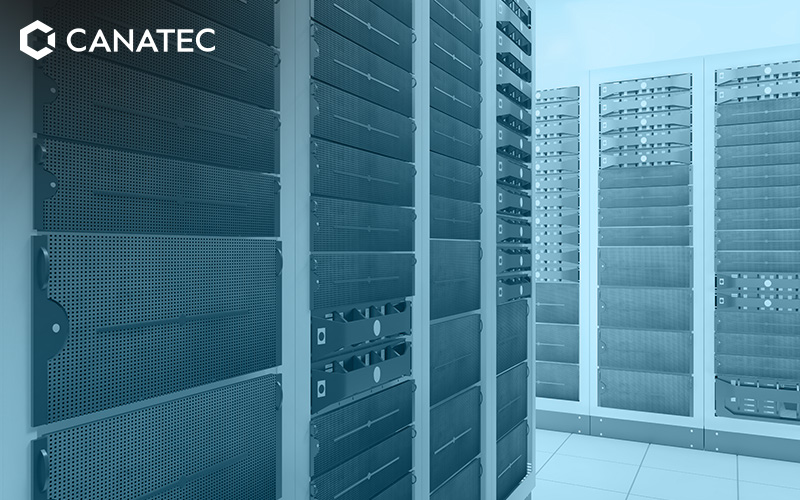
Rear door heat exchangers are installed at the back of server racks and use liquid to remove heat from exhaust air before it enters the room. This method can improve rack-level cooling performance without requiring full immersion or internal chip-level liquid delivery.
For some facilities, rear-door heat exchangers can provide a more accessible way to strengthen cooling performance, particularly in environments where selected racks need better heat management.
Which Liquid Cooling Approach is Right for Your Facility?
The best liquid cooling approach depends on your facility’s workload profile, current infrastructure, rack density, and future growth plans.
If you are introducing AI servers, GPU-intensive compute, or other high-heat applications while still working within a conventional rack architecture, direct-to-chip cooling may be the most suitable option. It offers targeted heat removal while allowing for a more familiar deployment model.
If your facility is built around extremely high-density or specialised computing environments, immersion cooling may offer stronger heat management. However, it also requires more operational adaptation, so it is not always the first step for every operator.
If your environment already relies on air cooling and you want to improve thermal performance without rebuilding the full system, hybrid cooling or rear-door heat exchangers may provide a more manageable path. These approaches can help facilities target the most demanding areas first while retaining value from existing infrastructure.
The right choice depends not only on technical performance, but also on operational readiness, maintenance processes, and the facility’s longer-term roadmap.
What to Consider When Integrating Liquid Cooling into Existing Air-Cooled Data Centres
Transitioning from a purely air-cooled setup to a hybrid or liquid-assisted cooling environment requires careful planning. Data centres must assess both their current infrastructure and future thermal demands to ensure compatibility, safety, and long-term efficiency. The considerations below outline the key elements operators should evaluate before integrating liquid cooling into an existing facility.
1. Heat Capture
Effective liquid cooling begins with optimising heat capture at the source. This involves selecting the appropriate coolant and ensuring the heat load-to-liquid ratio is properly balanced for efficient transfer. Early design work should also address essential parameters such as coolant flow rate and pressure, as these directly influence system performance and reliability.
2. Plumbing and Infrastructure
Introducing liquid into an air-cooled data hall requires careful routing of pipes and fittings, especially in raised-floor environments where airflow pathways are critical. Computational Fluid Dynamics (CFD) modelling can help determine the best placement for pipes and manifolds. Additional safeguards, such as drip pans, leak detection systems, and corrosion-resistant materials, should also be incorporated to minimise operational risks.
3. Liquid Cooling Equipment
At the server level, direct-to-chip solutions such as cold plates and liquid heat sinks remove heat directly from high-power components. When retrofitting existing environments, these components must align with current server designs, rack configurations, and vendor support guidelines. At the infrastructure level, Coolant Distribution Units (CDUs) play a part by regulating heat transfer between the facility water loop and the IT equipment loop. At the same time, they also maintain stable coolant temperature, pressure, and flow.
4. Balancing Cooling Capacity
Hybrid environments require a clear understanding of how much heat will be removed by liquid cooling versus the remaining load handled by air. Operators must verify whether existing cooling infrastructure can support this division. It is important to plan capacity properly for consistent performance.
5. Risk Mitigation
Liquid introduces new considerations around safety and failure prevention. Leak detection sensors, pressure monitoring, and the selection of appropriate fluids are essential. When electrical risk is a concern, dielectric (non-conductive) fluids offer an added layer of protection, particularly in high-density deployments.
6. Heat Rejection
Even with efficient liquid cooling, heat must eventually be discharged from the facility. This may require upgrades or adjustments to cooling towers, dry coolers, or heat exchangers. In tropical climates like Singapore, adiabatic assists can help maintain low supply temperatures and improve overall efficiency during hot or humid conditions.
Conclusion
Data center liquid cooling is becoming an increasingly important part of modern data centre strategy. As AI, HPC, and other high-density applications push thermal loads higher, traditional air cooling alone may no longer offer the most efficient or scalable path forward.
For operators in Singapore, the case is even more relevant. As the country continues to strengthen its position as a regional data centre hub, the need for efficient, future-ready, and sustainable cooling solutions becomes more pressing.
Whether the right path involves direct-to-chip cooling, immersion cooling, rear-door heat exchangers, or a phased hybrid model, the most effective strategy begins with understanding your current cooling profile and future infrastructure goals.
Looking to assess whether liquid cooling in data centres is right for your facility? Canatec can help you evaluate your cooling requirements, identify suitable solutions, and plan a more resilient thermal management strategy.