
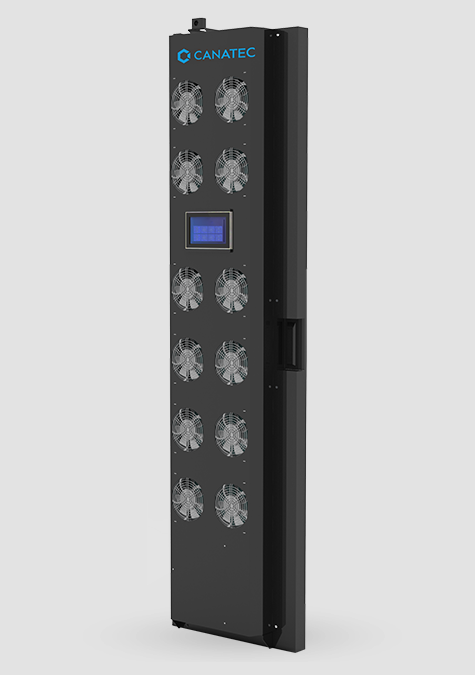
REAR DOOR HEAT EXCHANGER TECHNOLOGY
A rear door heat exchanger (RDHX) is a cooling device mounted directly on the back of a server rack to remove heat at its source. Instead of allowing hot air to circulate into the data hall, the heat exchanger captures and cools it immediately, maintaining stable rack temperatures and reducing the strain on room-level air conditioning.
ENABLE RACK DENSITY GROWTH
As compute density increases, traditional cooling methods may struggle to manage heat effectively. Rear door heat exchangers are increasingly used in high-density environments as they provide targeted, rack-level cooling that scales with demand.
Evolving with rising demands.
In a data centre environment, servers expel hot exhaust air from the rear of the rack. The rear door heat exchanger then captures and transfers the heat into a cooling medium such as water or refrigerant, ensuring that the air leaving the rack is already cooled before it re-enters the data centre environment.
The Canatec Smart Panel applies RDHX technology with adaptable integration options, supporting both new and existing infrastructure:
Flexible ImplementationSupports deployment alongside coolant distribution units (CDUs) or existing chilled water systems, allowing for gradual upgrades without full system overhaul. |
deployed_code |
Seamless IntegrationMounted directly onto server racks, enabling heat removal at source without requiring liquid-to-chip configurations. |
heat |
Efficient Heat RemovalCaptures and transfers heat at the rack level before it enters the data hall, reducing thermal load on central cooling systems. |
air |
Suitable for Medium to High DensityDesigned for environments with increasing compute demands, including AI and HPC applications. |
dns |
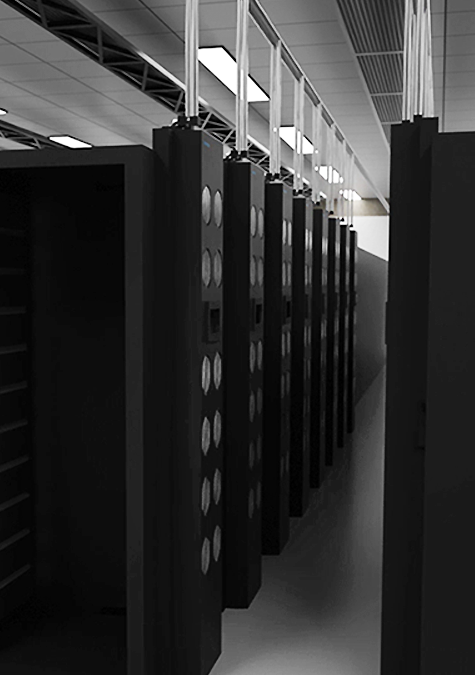
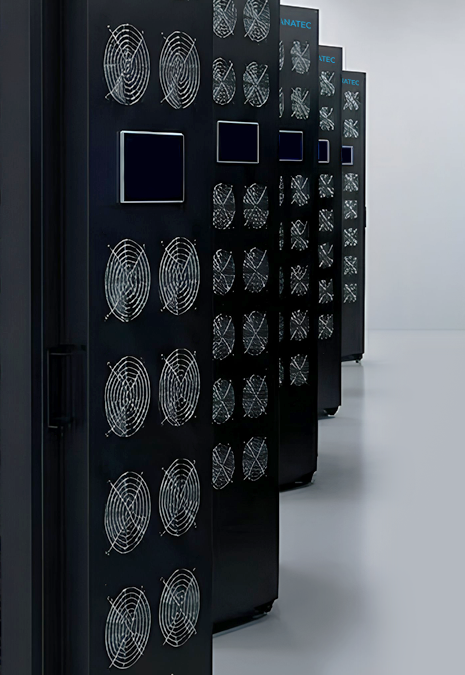
Key use cases in modern data centres & high density environments.
Rear door heat exchangers (RDHX) are widely deployed in environments where heat loads exceed the capabilities of traditional cooling systems. By removing heat at the rack level, they allow facilities to scale compute capacity without major infrastructure changes.
As workloads such as AI processing, GPU clusters, and high-performance computing increase rack power density, RDHX provides targeted cooling where it is most needed.
- Supports high-density racks (typically 20–35 kW, depending on design)
- Maintains stable inlet temperatures despite fluctuating workloads
- Reduces reliance on CRAC/CRAH units
- Avoids large-scale data hall reconfiguration
Edge data centres often operate in remote sites with limited cooling infrastructure.
- Compact solution suitable for constrained or containerized environments
- Reduces thermal hotspots in micro-data-centre setups
- Maintains performance even with less controlled airflow
For operators focused on improving PUE and reducing energy consumption, RDHX supports more efficient cooling strategies.
- Improves efficiency of existing cooling loops
- Reduces overcooling and unnecessary energy use
- Supports incremental sustainability improvements
In tropical climates such as Singapore, this approach helps reduce dependence on energy-intensive cooling systems while maintaining performance.
Older facilities designed for lower rack densities can adopt RDHX without major infrastructure overhaul.
- Can be retrofitted onto existing racks (subject to compatibility)
- Provides immediate relief for rising thermal loads
- Extends the operational lifespan of legacy environments
- Supports phased upgrades with minimal disruption
Seamless integration into existing systems.
+ COOLANT DISTRIBUTION UNIT |
| Our Smart Panel RDHX works with a coolant distribution unit to create an efficient, closed-loop cooling path. The RDHX captures heat directly from the rack exhaust before circulating the cooled air back into the data hall.
Real-time temperature readings allow the CDU to optimize coolant flow based on current demand. This setup removes heat at the rack level and maintains consistent performance across high-density racks. |
| Liquid Coolingnorth_east |
+ CHILLED WATER SYSTEM |
| Our Smart Panel RDHX can connect to an existing chilled-water system without major changes to the data hall. The RDHX draws chilled water from the facility loop and uses it to cool rack exhaust air.
An optional EPIV optimizes the flow required for cooling each individual rack. This approach supports higher thermal loads and improves cooling efficiency while maximizing the site’s current infrastructure. |
| Chilled Water Coolingnorth_east |
Frequently Asked Questions about Rear Door Heat Exchanger
A rear door heat exchanger (RDHX) is a liquid or refrigerant-assisted cooling door mounted on the back of a server rack. As servers exhaust hot air, the RDHX transfers that heat into a closed coolant loop, so air leaving the rack is cooled before it re-enters the data hall. This reduces hot spots, stabilises inlet temperatures, and lowers the load on room-level cooling.
RDHX delivers rack-level heat removal, while room systems handle broader airflow and environmental control. Many facilities run RDHX alongside precision cooling to balance localised heat capture with whole-room temperature and humidity management, improving overall efficiency.
RDHX solutions are commonly deployed from medium to high rack densities. They are suited to environments running AI, HPC, and dense virtualisation where heat loads exceed what traditional perimeter systems manage effectively. Exact capacity depends on the door design, coolant temperature, and the facility’s water availability.
Typical integrations include a coolant distribution unit (CDU) or connection to a chilled-water loop, along with control valves, sensors, and leak detection. Routine maintenance focuses on water-quality management, filter checks, valve function, and sensor calibration to ensure consistent thermal performance.
RDHX is often regarded as a transitional approach to liquid-based cooling. It removes heat at the rack level without altering server hardware, making it a practical option for data centres that need higher density support today while planning for more advanced methods, such as in-row or direct-to-chip solutions. You can learn more about these approaches in our guide to liquid cooling systems.